
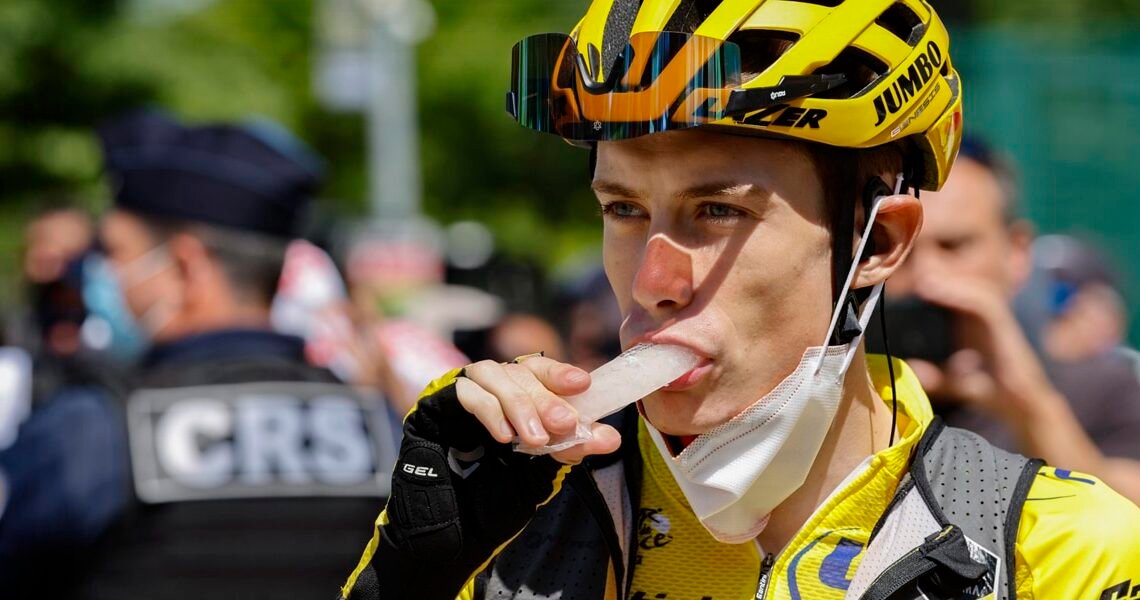

It should be no surprise to anyone by now that endurance performance is impaired in hot conditions. While heat affects everyone, it doesn’t affect everyone equally. Can we predict who might be more or less affected by heat?

Summer has definitely arrived in the Northern Hemisphere. May saw me in my final month of my sabbatical visit to Kelowna, where temperatures started hitting above 30°C but with relatively low humidity. Now back home in southern Ontario, I’ve been walloped with heat plus intense humidity. Personally, I find the humidity so much worse in terms of how I feel, from my motivation to even get outdoors on the bike to how I feel while exercising.
This leads to a common and vexing question amongst scientists, coaches, military commanders, and occupational physiologists. What are factors that affect how different people respond to heat? That is, can we predict who might be more affected in having greater performance impairment in the heat? For workers, who’s most at risk for heat illnesses?
Some factors have long been known to help with exercise-heat tolerance and performance. We know that aerobic fitness and heat adaptation both increase blood volume and sweat rates, which help with heat dissipation and keeping body temperatures lower (Cheung and Ainslie 2022). My own doctoral research also showed that aerobically fit individuals can push themselves to continue working even at higher body temperatures than less fit individuals (Cheung and McLellan 1998).
Peggen et al. 2026
A study from a Dutch research group in the International Journal of Sports Physiology & Performance sought to find out what factors predispose elite athletes to suffering worse performance in the heat than their peers (Peggen et al. 2026).
- A unique aspect of this study was bringing 106 elite Dutch athletes into the lab to perform a standardized incremental exercise test to exhaustion twice. Once was in pretty comfortable temperate conditions of 15.9°C and 55% relative humidity. The heat condition took place in 31.6°C and 75% relative humidity.
- The participants were all elite Dutch athletes competing in outdoor sports at an international level, and at least 16 years or older. Another nice aspect of this study was the equal inclusion of both male and female athletes (49% male).
- The incremental test was done on a cycle ergometer at 80-100 rpm. After 3 min warmup at 100 W, the wattage was increased to 70% maximal HR for a total of 20 min warmup. Then, wattage was raised every 3 min by 5% of the wattage at 70% maximal HR until voluntary exhaustion.
- None of the participants were performing or had recently completed a heat adaptation protocol.
Burning Down the House
This Dutch group has a long track record in thermoregulation research, and it was no mean feat to recruit so many elite athletes to come in for multiple days of testing. What were some key findings?
- Mean tolerance times were 60±14 min and 44±10 min in the temperate and hot conditions, respectively. The actual impairment ranged from 4-48% across individuals. 2/106 participants defied expectations and actually improved performance in the heat by 8 and 15%.
- Two factors significantly associated with greater performance impairments in the heat were: 1) greater dehydration rates, and 2) greater thermal discomfort in the temperate conditions.
- Some additional factors that contributed to impairment to a lesser degree included: 1) higher BMI (body mass index), 2) female sex, 3) higher core temperature increases in hot condition, 4) greater relative difference in peak HR between hot and temperate conditions.
- The full model with the above factors explained 58% of the inter-individual differences in responses.

Clues to Beating the Heat
I have a few actionable takeaways from the findings of this study.
First and foremost, none of the athletes were heat-adapted in this study. This isn’t a fault with this study as this choice was critical to their research question. However, it is indisputable that the biggest intervention to prepare for exercising or competing in the heat is to undertake a well-planned program of heat adaptation (Tyler et al. 2024). Cooling before or during exercise is important too (Tyler et al. 2015), but the essential foundation is to first be heat adapted.
Both of the primary factors can be controlled or mitigated. To offset dehydration (remember that fitness and heat adaptation both lead to greater sweat rates and faster dehydration), make sure you are properly hydrated BEFORE exercise. During exercise, drinking to thirst is usually sufficient, but some situations call for a very planned and scheduled hydration regimen (Cheung et al. 2025).
Perceived thermal discomfort can be trained both in temperate and hot conditions. My lab showed that a 2-week psychological training program focused on dealing with thermal discomfort greatly prolonged exercise-heat tolerance, even without any changes to physical fitness or capacity (Wallace et al. 2017).
Ride fast and far, and have fun!
References
Cheung S, Stellingwerff T, Stanley J, et al (2025) UCI Sports Nutrition Project: Special Environments. International Journal of Sport Nutrition and Exercise Metabolism 1:1–10. https://doi.org/10.1123/ijsnem.2025-0101
Cheung SS, Ainslie PN (2022) Advanced environmental exercise physiology, Second edition. Human Kinetics, Inc, Champaign, USA
Cheung SS, McLellan TM (1998) Heat acclimation, aerobic fitness, and hydration effects on tolerance during uncompensable heat stress. Journal of Applied Physiology 84:1731–1739
Peggen MAG, Bongers CCWG, Korte JQ de, et al (2026) Factors Associated With Performance Decrements in Elite Athletes During Exercise Under Hot and Humid Ambient Conditions. International Journal of Sports Physiology and Performance 21:640–647. https://doi.org/10.1123/ijspp.2025-0264
Tyler CJ, Reeve T, Sieh N, Cheung SS (2024) Effects of Heat Adaptation on Physiology, Perception, and Exercise Performance in the Heat: An Updated Meta-Analysis. J of SCI IN SPORT AND EXERCISE 6:195–217. https://doi.org/10.1007/s42978-023-00263-8
Tyler CJ, Sunderland C, Cheung SS (2015) The effect of cooling prior to and during exercise on exercise performance and capacity in the heat: a meta-analysis. British Journal of Sports Medicine 49:7–13. https://doi.org/10.1136/bjsports-2012-091739
Wallace PJ, Mckinlay BJ, Coletta NA, et al (2017) Effects of motivational self-talk on endurance and cognitive performance in the heat. Med Sci Sports Exerc 49:191–199. https://doi.org/10.1249/MSS.0000000000001087
The post Hot Enough for You? Who is Most Affected by Heat? appeared first on PezCycling News.